-
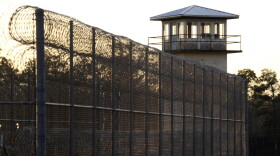 Alabama executed a man by lethal injection for a 1998 double murder, three months after a judge’s ruling blocked the state from putting him to death with nitrogen gas. Jeffrey Lee was also sentenced to death under a state policy abolished by Governor Kay Ivey in 2017. The Alabama Public Radio news team focused on the state’s “judicial override” practice, where juries could ask for life in prison for a convicted killer, but the judge could veto that decision and impose death. Lee was one of those cases, before Ivey ended the policy.
 -
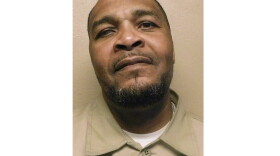 Alabama is set to execute a man Thursday night via lethal injection, three months after a judge's ruling blocked the state from putting him to death with nitrogen gas. Jeffery Lee, 49, is scheduled to receive an injection beginning at 6 p.m. at south Alabama's William C. Holman Correctional Facility for killing two people during a 1998 pawnshop robbery in rural Dallas County.
 -
 Tennessee and Oklahoma put inmates to death within 30 minutes of each other Thursday and Alabama followed suit hours later as U.S. states executed three men by lethal injection in one day for the first time since 2010. The Tennessee man was executed for killing a motel maid in 1985 and the Oklahoma man for killing his girlfriend in 2003. In Alabama, a man was put to death for killing a 5-year-old girl he had offered to pay her mother to abuse.
 -
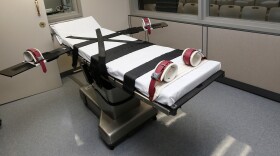 Three men in Tennessee, Alabama and Oklahoma are scheduled for lethal injection Thursday in a rare convergence of executions on the same day in the U.S. A man in Tennessee faces execution for killing a motel maid. An Oklahoma man is scheduled to die for killing his girlfriend. And an Alabama man will be put to death after dropping all his appeals in the killing of a 5-year-old girl he paid her mother to abuse.
 -
 The fate of Alabama death row inmate Jeffrey Lee remains in limbo following actions by the U.S. Supreme Court and a federal judge in Montgomery. This situation appears to be spilling over to other states and the debate over capital punishment.
 -
 Alabama is waging a last-minute legal fight to execute a man with nitrogen gas on Thursday night, asking the U.S. Supreme Court to set aside a judge's findings that the method violates the Constitution’s ban on cruel and unusual punishment. A federal judge on Tuesday ruled that Alabama’s nitrogen protocol is unconstitutional and blocked the state from using it to execute Jeffery Lee, 49. The Alabama attorney general’s office is appealing the decision.
 -
 A federal judge on Tuesday permanently blocked Alabama from executing an inmate with nitrogen gas after declaring the method violates the U.S. Constitution's ban on cruel and unusual punishment. Alabama Public Radio student intern Raven Johnson produced a feature with an international view of the state’s choice of nitrogen gas to suffocate death row inmates.
 -
 A federal appeals court has ruled that Alabama’s use of nitrogen gas to put people to death needs more study of whether it violates a constitutional ban on cruel and unusual punishment. This decision comes just days before a state death row inmate is scheduled to be executed using the controversial method.
 -
 A federal judge has ruled that execution by nitrogen gas does not violate the constitutional ban on cruel and unusual punishment, rejecting an Alabama inmate’s claim that it causes excessive suffering.
 -
 A divided Supreme Court on Thursday dismissed Alabama's bid to be allowed to execute a convicted murder who was found by lower courts to be intellectually disabled.

Digital Media Center
Bryant-Denny Stadium, Gate 4
Box 870370
920 Paul Bryant Drive
Tuscaloosa, AL 35487-0370
205-348-6644
© 2026 Alabama Public Radio
Bryant-Denny Stadium, Gate 4
Box 870370
920 Paul Bryant Drive
Tuscaloosa, AL 35487-0370
205-348-6644
© 2026 Alabama Public Radio
Play Live Radio
Next Up:
0:00
0:00
Available On Air Stations


