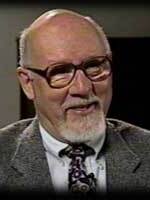
As Director of the Livingston Press, Joe Taylor has always been a promotor of avant-garde and offbeat writing and is a steady producer of edgy fiction himself: fantasy, satire, even novels in verse.
“Francine” might be described as science fiction. The character does, inexplicably, travel through time from the seventeenth century to the present, but the emphasis is on her adventures, not on the apparatus. The travel is a given. The narrator, Francine, a young woman, speaks to us now in the twenty-first century. She remembers her last time with her “father,” René Descartes, on a sailing ship in a violent storm, talking in their cabin.
Before going much farther I recommend the reader look at the Wikipedia entry on Descartes, 1596-1650. You will be amazed. An indisputable, singular genius, Descartes is hailed as the father of modern philosophy, the father of analytic geometry and of calculus. Here, most importantly, Descartes is the father of Francine. In real life, Descartes’ daughter, Francine, died of scarlet fever at the age of 5, in 1630. In Taylor’s novel, Descartes, grieving, heartbroken, makes a replacement, a mechanical, daughter, an automaton.
Automata are mechanical devices made to look as if they are alive and have volition. They have been made since the classical Greeks, and the ones we would be most familiar with would be the cuckoo clock or the bell striker in a cathedral tower. In this novel, the creation comes alive. How? This can’t really be known. Not lightning as in Frankenstein. Perhaps the “power of a father’s grief”? Did a compassionate god put life into Descartes’ creation? In any case, Francine IS alive. She exists, and she is certain of it because, as her father taught her, “cogito ergo sum”: I think therefore I am, and so she is!
The superstitious sailors, frightened by a talking mannequin, threw Francine overboard but of course she did not perish. Quite the contrary—as the novel progresses she becomes a kind of immortal, time-traveling Forrest Gump, present at many auspicious occasions. She was in the American West, in Hollywood, and in New York City when the Twin Towers fell. She was a nurse at Los Alamos and she nursed side-by-side with Walt Whitman during the Civil War.
Francine, her father’s daughter after all, naturally sought out philosophers and had several days of chat with Friedrich Nietzsche. At present she is understandably interested in artificial intelligence. She has numerous affairs, one in Paris during the Reign of Terror, some with women. She admired Alan Turing and lamented his tragedy, and although she says she mostly avoids poets, she had a drink with John Berryman and did sleep with Shelley, declaring: “what woman of an age didn’t?” Francine rates lovers by occupation: poets, musicians and accountants rate low. Bakers are the best mates: “competent, patient, attuned, mindful lovers.”
Taylor’s newest is clever, witty, insightful and fun.