-
 Astronaut Randy Bresnik flew aboard space shuttle Atlantis in 2009. He later worked aboard the International Space Station. NASA named him Commander, and three other men to be on the crew, of Artemis-3. The astronauts will launch aboard an Alabama built Space Launch System rocket to test one or both of lunar landers NASA may use for the first mission to put people on the moon since Apollo 17 in 1972.
 -
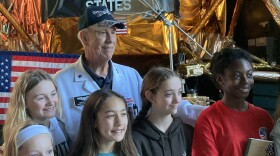 The U.S. Space and Rocket Center in Huntsville announced that retired NASA Apollo engineer Craig Sumner has died. The veteran of the Apollo moon landings, the now retired space shuttle program, and the first two launches of the new Alabama built “Space Launch System” rockets for Artemis, was recovering from surgery this week when he died, the Center said. Sumner was central to Alabama Public Radio's coverage of Artemis-2.
 -
 When NASA planned to send four astronauts to the moon for the first time since 1972, the rocket was built here in Alabama. Artemis-2 took the first people to Earth's nearest neighbor since 1972. It trip was a highlight for the U.S. Space Agency. Alabama played a role in one of its low points, the loss of space shuttle Challenger in 1986. The Artemis crew photographed a spot on the moon called the "Ocean of Storms." An astronaut from Mobile, Alabama was supposed to land there during Apollo 12 in 1969. It didn't happen.
 -
 The dust is settling on the fly-by of the Moon of Artemis-2, and NASA is planning to take a big step this week toward the launch of the next missions, called Artemis-3. These new Moon flights begin with blastoff aboard an Alabama built rocket called the “Space Launch System.”
 -
 The four astronauts of NASA‘s Artemis-2 mission are getting used to life on Earth again. The crew splashed down in the Pacific after their flyby of the Moon. The astronauts took photos of the lunar surface, including one spot called the Ocean of Storms. One astronaut from Mobile was supposed to get a lot closer than that. Clifton Williams was meant to land there during Apollo 12 in 1969.
 -
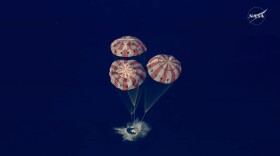 Artemis II’s astronauts returned from the moon with a dramatic splashdown in the Pacific on Friday to close out humanity’s first lunar voyage in more than a half-century. One of the four space shuttle engines used during the upcoming launch of Artemis-3 next year comes from the final launch of the shuttle in 2011.
 -
 Drawing ever closer to Earth, the Artemis II astronauts tidied up their lunar cruiser for the upcoming “fireball” return and reflected on their historic journey around the moon, describing it as surreal and profound. This is the end of their journey, which began aboard NASA's new "Space Launch System" rocket which was designed, built, tested, and managed at the Marshall Space Flight Center in Huntsville.
 -
 Jimmy Wales of Huntsville recalls how the windows of his boyhood home would rattle. NASA engineers, nearby, were testing the Saturn V rockets that would send astronauts to the moon. Wales is among the youngsters referred to as the "children of Apollo." Kids, including Steve Jobs of Apple and Bill Gates of Microsoft, were reportedly inspired by the Astronaut Neil Armstrong's "one small step" on the moon. Wales boyhood in Huntsville was one topic we take up in this encore presentation of "APR Notebook." It's at 8:30 am on Alabama Public Radio.
 -
 After traveling deeper into space than any other humans, the Artemis II astronauts pointed their moonship toward home Monday night . NASA’s Orion capsule reached a maximum distance of 252,756 miles from Earth before hanging a U-turn behind the moon, 4,101 miles farther than Apollo 13. One astronaut from that earlier mission knew it was coming.
 -
 NASA’s Artemis-2 astronauts fired their engines and blazed toward the moon Thursday night, breaking free of the chains that have trapped humanity in shallow laps around Earth in the decades since Apollo. The Marshall Space Flight Center is gearing up for the next launch of NASA's new "Space Launch System" rocket on Artemis-3.

Digital Media Center
Bryant-Denny Stadium, Gate 4
Box 870370
920 Paul Bryant Drive
Tuscaloosa, AL 35487-0370
205-348-6644
© 2026 Alabama Public Radio
Bryant-Denny Stadium, Gate 4
Box 870370
920 Paul Bryant Drive
Tuscaloosa, AL 35487-0370
205-348-6644
© 2026 Alabama Public Radio
Play Live Radio
Next Up:
0:00
0:00
Available On Air Stations


