-
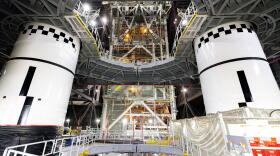 NASA has an updated timeline on plans to put astronauts on the moon. And, the agency praised the engineers behind its Alabama built rocket that plays a role in that effort. NASA wants to launch Artemis three next year on a seventeen day mission to test two commercial moon landers.
 -
 NASA has announced that a 34-year agency veteran, and graduate of the University of Alabama, will take the top job at the Marshall Space Flight Center. The space agency’s administrator Jared Isaacman has named Stephen Cash director of Marshall. His first day on the job is today.
 -
 What happens when a NASA engineer trades rocket hardware for the dark, raw reality of 1990s grunge? On this episode of Quick-Fire Quips, author Zach Taylor talks about his gritty debut novel, Rockstar: Echoes (the sequel Rockstar: Mirrors is officially in production!) Hear why he wanted to strip away the showbiz glamour to expose the financial tolls and gender disparities faced by rock icons. Plus, the strict bass fishing superstition he swears by on the water and the change he thinks Alabama needs to make for its future.
 -
 2026 has been a busy year for NASA. Four astronauts flew to the moon for the first trip there by human beings there since Apollo 17 in 1972. The flight of Artemis two also highlights Alabama's role in the US space program. The Marshall Space Flight Center in Huntsville designed, built, tested, and manages the big Space Launch System rocket that sends Artemis missions to Earth orbit. Huntsville has its claim to fame when it comes to NASA, but Opelika does too. One of its favorite sons is retired astronaut Jim Voss. He flew four times on the space shuttle and served on the second full-time crew aboard the International Space Station. A conversation that's out of this world, is next on APR Notebook.
 -
 2026 has been a busy year for NASA. Four astronauts flew to the moon for the first trip by human beings there since Apollo 17 in 1972 The flight of Artemis two also highlights Alabama's role in the US space program. The Marshall Space Flight Center in Huntsville designed, built, tested, and manages the big Space Launch System rocket that sends Artemis missions to Earth orbit. Huntsville has its claim to fame when it comes to NASA, but Opelika does too. One of its favorite sons is retired astronaut Jim Voss. He flew four times on the space shuttle and served on the second full-time crew aboard the International Space Station, a conversation that's out of this world, is next on APR Notebook.
 -
 Drawing ever closer to Earth, the Artemis II astronauts tidied up their lunar cruiser for the upcoming “fireball” return and reflected on their historic journey around the moon, describing it as surreal and profound. This is the end of their journey, which began aboard NASA's new "Space Launch System" rocket which was designed, built, tested, and managed at the Marshall Space Flight Center in Huntsville.
 -
 When four NASA astronauts blasted off on Artemis-2, something was trending on the social media platform Bluesky. It was called "Challenger trauma." People posted about witnessing the 1986 space shuttle Challenger accident and how they felt a visceral sense of unease as Artemis lifted off from the launch pad. The four astronauts blasted off on a rocket built here in Alabama. The investigation into the loss of Challenger focused, in part, on a statement witnesses say was made by a manager at the Marshall Space Flight Center in Huntsville.
 -
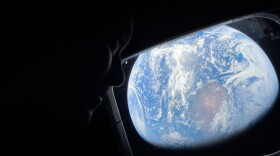 Now more than halfway to the moon, the Artemis II astronauts prepared for their historic lunar fly-around to push deeper into space than even the Apollo astronauts. On the downside, a key piece of equipment is on the blink again.
 -
 The astronauts aboard Artemis-2 are preparing for a fly-by of the moon as part of the mission in space. The trip began with a ride to Earth orbit aboard NASA’s Alabama built new moon rocket called the “Space Launch System,” or SLS. Three of the Artemis astronauts are space veterans. But, none of the crew members flew aboard NASA’s space shuttle which uses solid rocket boosters for blastoff. They shared thoughts on the ride.
 -
 Four astronauts embarked on a high-stakes flight around the moon Wednesday, humanity’s first lunar voyage in more than half a century and the thrilling leadoff in NASA’s push toward a landing in two years. The crew flew to Earth orbit aboard the space agency’s new “Space Launch System” rocket designed, built, tested, and managed by the Marshall Space Flight Center in Huntsville.

Digital Media Center
Bryant-Denny Stadium, Gate 4
Box 870370
920 Paul Bryant Drive
Tuscaloosa, AL 35487-0370
205-348-6644
© 2026 Alabama Public Radio
Bryant-Denny Stadium, Gate 4
Box 870370
920 Paul Bryant Drive
Tuscaloosa, AL 35487-0370
205-348-6644
© 2026 Alabama Public Radio
Play Live Radio
Next Up:
0:00
0:00
Available On Air Stations


