
-
 Felix MikusScientists have found a species they've named the fire amoeba, which is capable of reproducing at 145°F and continuing to move up to temperatures of 147°F — a record for complex eukaryotic life.
 -
 Karsten Moran/for The Washington Post/Getty ImagesOpenAI beat humans to solving the Navier-Stokes problem, but mathematicians say the AI's solution isn't telling them much.


-
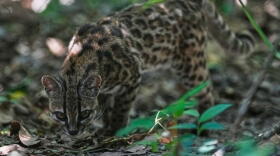 What looks like a leopard, but is tinier than a house cat? It’s a brand new species of cat called leopardus tilcayo.
 -
A group in Kenya is connecting expectant/new moms with a chatbot that can answer basic questions and connect them with a medical professional if needed.
-
 The U.S. gets nearly a third of its pork from Iowa. One family is making the switch from pigs to more sustainable specialty mushrooms and trying to show other pig farmers how they did it.
 -
 A record-breaking summer for foodborne illness prompted more consumers to grow produce at home. But experts say it's the farming practices, not size, that matters for food safety.
 -
 The lions were found dead inside the Ngorongoro Conservation Area, a popular wildlife reserve in Tanzania. Deaths raise concerns over wildlife poisonings in East Africa.
 -
 In the bustling heart of the southern Indian city of Chennai is a market that never sleeps, where residents from the poorest neighborhoods wage a battle of survival with the sea.
 -
Eastern monarch butterflies are flying more than 2,000 miles south, through the central U.S., to overwinter in Mexico. We look at a project aimed to help the pollinators along their journey.
-
 State officials say the new SpaceX site will be a $100 billion investment and launch thousands of rockets. Lawmakers helped ease regulations and negotiations were covered under nondisclosure agreements.
 -
 New research on ancient human remains suggests the habitual usage of betel nuts, a plant seed with mind-affecting properties that is popular in parts of Asia despite the health risks it presents.
 -
 Last year, remnants of a typhoon damaged homes, infrastructure and an archaeological dig site. Now, archaeologists are trying to get as many objects out as possible before the next storm.


