Although we don’t think about it much, there are several different kinds of book reviews. The one we are most familiar with is, in its crudest form, stars—one, two, three etc.—an advice column, suggesting the reader get this book or, in some cases, warning the reader off.
With some reviews, however, reviewers know perfectly well few readers are ever going to buy or read this book. A review in the “London Review of Books” about two new studies of the Sino-Japanese War is meant to be informative. When you finish this piece you will know some things you did not know before.
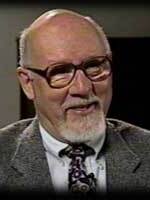
So it is with Harold Bloom’s “Literary Letters,” edited elegantly with a tidy and informative introduction by Heather White of the Alabama English Department, a student of Bloom at Yale. Harold Bloom, 1930-2019, was the most important literary critic of his time.
A phenomenon, raised in a Yiddish-speaking household, it is said he taught himself Hebrew at the age of three, learning English shortly thereafter. He read Greek and Latin of course and many modern languages.
Bloom had a photographic memory and could recite “Paradise Lost” on demand and could read a 400-page book in one hour with total recall. Perhaps the best way to think about him is as a Mozart of literary criticism, a Picasso of exegesis, a freak of nature, so to speak.
White’s book is comprised of Bloom’s correspondence with eight other writers: Northrop Frye was an influential critic, Ursula Le Guin mainly a fiction writer, and the six others are poets he admired, his favorite A. R. “Archie” Ammons.
In his letters he praised, boosted, encouraged poets—God knows poets in America need it—but he could be harsh. Oddly, he dismisses both the work of the masterful Richard Wilbur as “smooth and tinkling nothings” and the “Post-Ginsbergian barbarians who have nothing to say in their inauthentic roughness.”
For a while some theorists promoted the idea that all writing, including diaries and public health pamphlets, were literature, too. No laboratory tests were available. Who was to say they weren’t? The answer? Harold Bloom. And YOU. An “overwhelming sensation” comes over you when the writing speaks to you.
Therefore he made a guide, a list of “bests,” “The Western Canon,” 26 books that shaped our world. At the top of any list was Shakespeare, whom Bloom worshipped. He even suggested Shakespeare’s characters have instructed us in the West on how to behave as humans. Jealousy we learned from Othello, self-loathing from Hamlet.
Bloom had many theories. For example, his primary theory, “The Anxiety of Influence,” suggests all writers are in a struggle with their predecessors and the struggle is Oedipal in nature. The poet Archie Ammons writes he doesn’t understand “The Anxiety of Influence.” This makes me feel better.