-
 2026 has been a busy year for NASA. Four astronauts flew to the moon for the first trip there by human beings there since Apollo 17 in 1972. The flight of Artemis two also highlights Alabama's role in the US space program. The Marshall Space Flight Center in Huntsville designed, built, tested, and manages the big Space Launch System rocket that sends Artemis missions to Earth orbit. Huntsville has its claim to fame when it comes to NASA, but Opelika does too. One of its favorite sons is retired astronaut Jim Voss. He flew four times on the space shuttle and served on the second full-time crew aboard the International Space Station. A conversation that's out of this world, is next on APR Notebook.
 -
 2026 has been a busy year for NASA. Four astronauts flew to the moon for the first trip by human beings there since Apollo 17 in 1972 The flight of Artemis two also highlights Alabama's role in the US space program. The Marshall Space Flight Center in Huntsville designed, built, tested, and manages the big Space Launch System rocket that sends Artemis missions to Earth orbit. Huntsville has its claim to fame when it comes to NASA, but Opelika does too. One of its favorite sons is retired astronaut Jim Voss. He flew four times on the space shuttle and served on the second full-time crew aboard the International Space Station, a conversation that's out of this world, is next on APR Notebook.
 -
 When NASA planned to send four astronauts to the moon for the first time since 1972, the rocket was built here in Alabama. Artemis-2 took the first people to Earth's nearest neighbor since 1972. It trip was a highlight for the U.S. Space Agency. Alabama played a role in one of its low points, the loss of space shuttle Challenger in 1986. The Artemis crew photographed a spot on the moon called the "Ocean of Storms." An astronaut from Mobile, Alabama was supposed to land there during Apollo 12 in 1969. It didn't happen.
 -
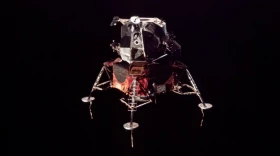 The astronauts of Artemis-2 are getting used to normal gravity after spending nine days in weightlessness. The yet-to-be name crew of Artemis-3 may spend part of their time in orbit facing the same risks as Apollo astronauts Jim McDivitt and Rusty Schweikart in 1969. Those astronauts tested the bug-like lunar lander that Neil Armstrong and Buzz Aldrin would use during the first ever landing on the Moon.
 -
 When four NASA astronauts blasted off on Artemis-2, something was trending on the social media platform Bluesky. It was called "Challenger trauma." People posted about witnessing the 1986 space shuttle Challenger accident and how they felt a visceral sense of unease as Artemis lifted off from the launch pad. The four astronauts blasted off on a rocket built here in Alabama. The investigation into the loss of Challenger focused, in part, on a statement witnesses say was made by a manager at the Marshall Space Flight Center in Huntsville.
 -
 NASA’s Artemis-2 astronauts fired their engines and blazed toward the moon Thursday night, breaking free of the chains that have trapped humanity in shallow laps around Earth in the decades since Apollo. The Marshall Space Flight Center is gearing up for the next launch of NASA's new "Space Launch System" rocket on Artemis-3.
 -
 The Four astronauts aboard Artemis-2 are settling into the mission to the moon after a ride to Earth orbit aboard NASA’s new “Space Launch System” rocket that was designed, built, tested, and managed at the Marshall Space Flight Center in Alabama. Wednesday’s blastoff was based on “leftovers” from the retired space shuttle. Specifically, the cluster of liquid fueled engines at the base of the rocket. That includes NASA's last Hubble servicing mission.
 -
 This week marks forty years since seven astronauts were killed in the space shuttle Challenger accident in 1986. Families of the astronauts lost aboard Challenger gathered back at the launch site last week to mark that tragic day 40 years ago. All seven on board were killed when Challenger broke apart following liftoff on January 28, 1986. The Rogers Commission investigation into Challenger disaster assigned part of the blame on a manager at the Marshall Space Flight Center.
 -
 The United Launch Alliance company is gearing up for the next use of one of its remaining Alabama built Atlas-V rockets to launch the next mission of Boeing’s Starliner spacecraft to the International Space Station. That flight could come as soon as April of 2026. The contractor, and its Atlas boosters which are built at the ULA factory in Decatur, are currently under contract to launch for Starliners.
 -
 Billionaire Elon Musk said, in response to Trump threatening to cancel his company’s government contracts, he will immediately begin decommissioning the SpaceX Dragon. The rocket that brought two stranded NASA astronauts back to earth is also the only U.S. rocket that can carry crews to and from the International Space Station. Huntsville’s Marshall Space Flight Center manages science on the outpost.

Digital Media Center
Bryant-Denny Stadium, Gate 4
Box 870370
920 Paul Bryant Drive
Tuscaloosa, AL 35487-0370
205-348-6644
© 2026 Alabama Public Radio
Bryant-Denny Stadium, Gate 4
Box 870370
920 Paul Bryant Drive
Tuscaloosa, AL 35487-0370
205-348-6644
© 2026 Alabama Public Radio
Play Live Radio
Next Up:
0:00
0:00
Available On Air Stations


