


Quick-Fire Quips is a questionnaire where we get to know people who stand out in the State of Alabama! Today, Alabama Public Radio host Baillee Majors talks with Keya Nkonoki, Director of Marketing and Tourism for the Freedom Quilting Bee Legacy in Alberta.

The nonprofit is the co-organizer of the 5th Annual Airing of the Quilts Festival, set to take place on Saturday, October 3, 2026, in the heart of Gee's Bend in Boykin.
It's a celebration of generations-old quiltmaking tradition, featuring quilt displays and sales, workshops, demonstrations, guided tours, food and more.
Baillee: Hi, Keya. How are you?
Keya: I'm great. How are you doing today, Baillee?
Baillee: I'm doing good, so happy to chat with you! To get us started, for those who are unfamiliar, will you talk to me about the Freedom Quilting Bee and its legacy?
Keya: The Freedom Quilting Bee Legacy Museum was founded in 2021 to preserve the history of the original Freedom Quilting Bee. The original Freedom Quilting Bee was created as a cooperative in response to and as a part of the civil rights movement.
Martin Luther King Jr. came down to Gee's Bend just about three weeks before Bloody Sunday, and he gave a powerful speech in the community. Alberta is adjacent to Gee's Bend along County Road 29, and that community really listened to his message. They were mobilized to get out and vote, which caused several swift responses from local law enforcement and the powers that be.

One response was that they shut down the ferry that typically brought people from Gee's Bend over to Camden. It remained closed for about 50 years in an effort to keep them from voting, and a lot of people lost their jobs as well.
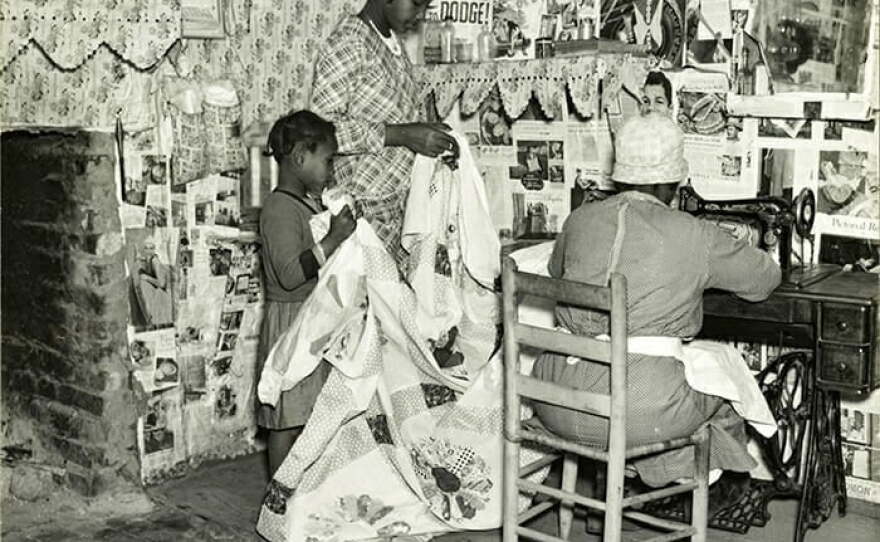
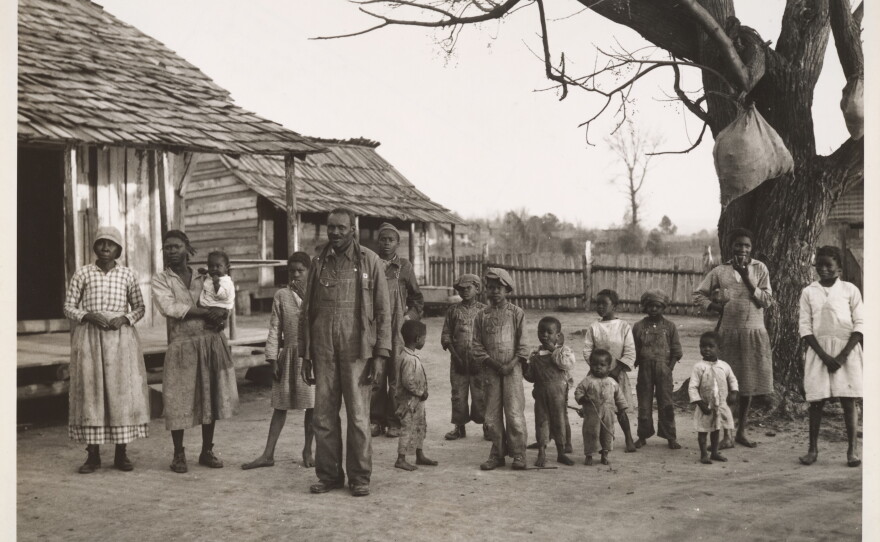
So, the Freedom Quilting Bee Cooperative was started as an economic driver for the community to be able to work and sustain their livelihood. Many of the women living in that area owned their land, allowing them to leave sharecropping and go into the manufacturing business.
Around that same time, an Episcopal priest named Francis Walter came down to Gee's Bend and saw these beautiful quilts aired out. The women thought they were just making quilts to keep their children and families warm. In effect, what they had made was what he called abstract, iconic art. He believed he could take them to New York, sell them, and bring the money back to the community.
He did exactly what he said. He took the quilts to New York, and they got in front of really important people who wanted more and had the ability to get them into department stores.

He came back and gave the money to the community. They started out in a shack and then ended up in the building that we're in now, where they manufactured quilts for Lord & Taylor, Bloomingdale's, Saks Fifth Avenue, and on and on. At its peak, it was a bustling production. But in the late '90s, when NAFTA came into play, production came to a halt and they had to close down.
When we reopened in 2021, we established a museum installation that documents Martin Luther King Jr. and Francis Walter coming into the community, as well as the stories of all the original members of the Freedom Quilting Bee.
Baillee: Can you tell me what you do at the Freedom Quilting Bee Legacy?
Keya: Absolutely. I'm the Director of Marketing and Tourism, so I help let people know about Gee's Bend and Alberta, and our different destinations. We have two museums and a signature event [Airing of the Quilts Festival] that happens every year on the first Saturday in October, which has grown exponentially year over year. This year will be our fifth year in existence. Last year, we had over 2,500 people attend from all over the world.
I came on just before that event, and the main goal was figuring out how to bring people down County Road 29 to visit Gee's Bend and Alberta all year round. We offer classes and workshops, and we let people know about them through social media and newsletters. I came in to help amplify all the gems already existing in the destination.

Gee's Bend.

Gee's Bend.

Gee's Bend.

Gee's Bend.

Gee's Bend.

Gee's Bend.

Gee's Bend.
Baillee: Wonderful. We’ll talk more about the Freedom Quilting Bee Legacy, Alberta and Gee's Bend, but first, let's get you warmed up for the questionnaire. And to do that, I want you to say "Quick-Fire Quips" three times fast.
Keya: Quick-Fire Quips, Quick-Fire Quips, Quick-Fire Quips.
Baillee: First question: What comes to mind when you hear the word Alabama?
Keya: Immediately, I just think of trees and porches with swings on them.
Baillee: What is a hidden gem in Alberta that more people should know about?
Keya: I think people sometimes think the only way you can access Gee's Bend is across the ferry. But there is actually a road you can drive through Alberta to get into Gee's Bend. That's a nice hidden gem because sometimes people skip visiting if the ferry isn't running.
If you turn off Highway 5 where the signs say Gee's Bend, you make a left, come through Alberta, and you can make your way in by road. You can do that any time of day, though we recommend driving rural roads in the daylight.

Baillee: YWhat's your favorite thing about living in Alabama?
Keya: I think it's just such a hidden gem with so much to explore. Whether you go south to Mobile and the Delta to see all the different species of fish, or north toward Decatur and Huntsville for the Monte Sano trails up in the mountains, it’s incredibly diverse. You also have Orange Beach, which has gorgeous beaches. It’s unique that all of these different dynamics coexist in the same state.
I also love the pace of things. You're not stuck in a lot of traffic, and people bring a whole new meaning to the word "community" by truly supporting each other. My neighbor will drop off things from her garden—those are things that don't really exist anymore in bigger cities.
Aside from the history, almost everyone you meet has a side job where they do creative making. I have met some of the most amazing full-time and part-time artists here. The community is creative in ways that I haven't experienced anywhere else.
Baillee: What is a bad stereotype or something that people get wrong about Alabama?
Keya: The most common one I've experienced over the years is that people tend to mistake slow speaking for a lack of intelligence.
Southerners are some of the most inventive and intelligent people you'll ever meet, yet sometimes that doesn't come across to outsiders because of the slower speech pattern.
Baillee: Can you talk about the significance in quilting in Alabama? How different quilting patterns hold history and stories from Alabama?

Keya: Absolutely. Well, to speak directly to Alabama, we recently at the Freedom Quilting Bee Legacy held a special quilting workshop. We do a quilting workshop with our quilters from Gee's Bend every third Saturday of the month.
And so for January, to launch off 2026, we had a special Pine Burr-themed workshop. The Pine Burr quilt is the official quilt for the state of Alabama. That quilt was designed by a quilter from Gee's Bend, and we were able to ask Alabama Archives to release it just for the day. So we had this special viewing in conjunction with our Pine Burr workshop where people got to come and view the Alabama State Quilt.
And what I found fascinating about it was, I mean, it was like a white-glove experience in that they really cherished that quilt. It had to have—could not get higher than a certain temperature. It was folded a certain way, contained a certain way. Only the two of them could touch it. I mean, it put a whole new meaning to it for our quilters.
This is generations of quilting that they've been doing. Of course they care for their quilts, but they're not treated quite so fragile. Right? Yeah. But this wasn't—it is an older quilt. It is. We understand why. It's a piece of art. It's a work of art. And so that was really, really amazing.
In addition to that, right now we have an exhibit that exists in our River Gallery, which is in the Gee's Bend Welcome Center. And that exhibit inside of there tells the story of Dinah Miller, who we know was the Ground Zero quilter that brought the quilting arts into Gee's Bend.
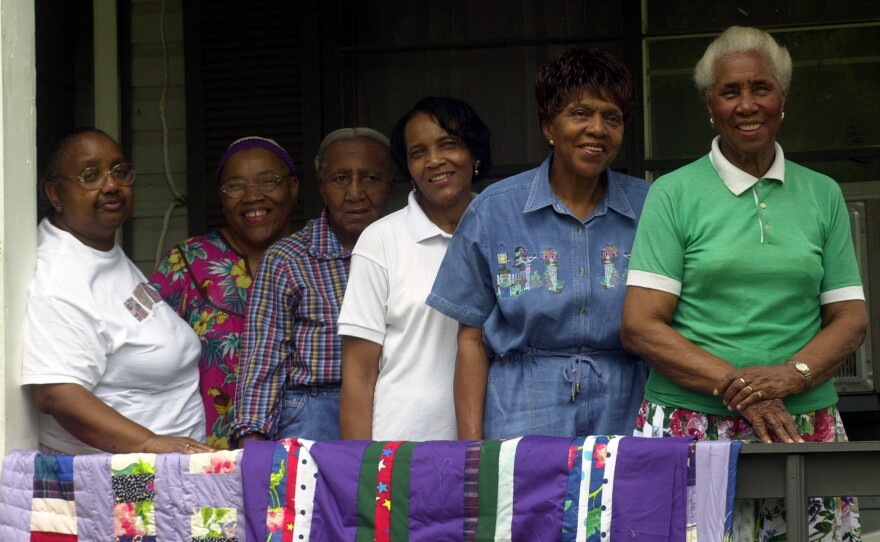
This was over one hundred years ago. And we also know that she was one of the one hundred Africans that were brought over from Benin illegally on the Clotilda slave ship in Mobile, Alabama. So that exhibit really highlights and tells that story, and it tells the story of her direct descendants. One of our docents in our museum is a seventh-generation great-great-great-granddaughter of Dinah Miller. A few of our quilters can trace their lineage right back as direct descendants to her.

And so there's a quilt that's inside the Welcome Center that was something that all the descendants came together and participated in. They all did their own piece of that quilt, and they quilted it all together in honor of her legacy. So I think what makes Gee's Bend quilts in general so iconic, so special—they are in permanent installations in over forty museums around the world right now.
What makes them stand out so much, we think comes from the fact that they've been able to work together in community years and years and years, generation after generation.
The Freedom Quilting Bee Legacy and the quilters went to QuiltCon. It's like Comic-Con, but for quilters, and it was in Raleigh, North Carolina, this year. And there's over 20,000 people that come from all over the world and see our museum, and our quilters were the special exhibit. So we had a special area. We had a mother, a daughter, and a sister that were all from the same family, and they were selling their quilts, their art.

Sometimes people wonder, "Well, how much of this is passing down to our younger generation? This is an old art." But the young people are coming back around. They are wanting to do these crafts and art by hand. They're getting back into VCRs and tape cassette playing, and they're very much coming back around to these considered like older technologies and techniques.
Baillee: Can you talk about the need and the importance of making sure that these stories are not forgotten and still shared with Alabama today?
Keya: Well, for one thing, it really instills a pride of place for the community because sometimes you have people telling you—as I stated, the quilters, when they first started out, it was for function, and they weren't aware that they were making art. And so sometimes you don't understand the value of what your own community—the history and the artistry that exists in your own community.
And so I think telling these stories, bringing people into Gee's Bend versus having all of the works go out of Gee's Bend, which has been what has happened historically—these arts will be in Sears and Bloomingdale's and Lord & Taylor's, and they're up in museums that are across the ocean in every direction, right? But the community may not get to see them there. Mhm. So you're not really understanding the value of your history.
So what we've seen now is, one, people are seeking lived history. They're seeking to be able to go into a community and experience—our younger generations of Gen Zers, they're wanting to go to things, and they want to go and be in these communities.

We had a Quilted Hearts workshop for Valentine's Day at the Freedom Quilting Bee Legacy. It was just a two-hour workshop. But we had people, young folks, driving in from Georgia, and just other distant parts of the state, because they wanted to have this experience inside the community.
And they wanted to take a holiday that is about chocolates and spending a lot of money on things that really may not stay with you—mhm—and they made it into something where they could get some history, some education, and get to sit with the hands of the quilters and do something fun. And also at the same time, they're putting their dollars towards sustainable tourism.
And I think we're getting to a place where we really want to have these authentic experiences. We want to live our history. And there's different books that are disappearing. And so people are wanting to come and get it straight from where it happened.
And Alabama is unique in that way that we have a lot of lived history to be able to tell a lot of stories in regards to civil rights, in regards to enslavement, and also in regards to art—like where art meets history.
There has to be some outlet for all of this, and we've used art in the South as a huge outlet. And now we have the opportunity to use art as a way to connect and bring our differences—of what we perceive as our differences, like a quilt—quilting it back together.




Baillee: Can you talk about how that space is really important for community then and also still now?
Keya: I think in this story of resistance through art, quilting resistance, what I found fascinating at QuiltCon was—the Modern Quilt Guild puts on QuiltCon. So I'm going to give them a little shout-out— this was their first time inviting the Gee's Bend quilters and the Freedom Quilting Bee Legacy to QuiltCon.
And for them to highlight us as a special exhibit, drive traffic to our area, even though their name is there, the Modern Quilt Guild—so it's more about modern quilting, but they saw the importance of telling the history because, in a lot of ways, the Gee's Bend quilters are where everybody has learned from—like, this is the blueprint. And so bringing us into that space really gave a certain level of honor and homage.
And I can't tell you how many people were almost in tears to get to meet them, to get to learn this history, and how many of them are planning to come down for our Airing of the Quilts event, which is our signature event in October—the first Saturday of every October.
What I found on display as we went out and viewed their quilts—because we wanted to see what they were doing—I was so impressed with how much quilters are using their art to express their quiet resistance. Like it's a place for them to exercise their beliefs, their thoughts, their frustrations with the world around them. And so that was on display in a lot of really unique installations of quilts.
And I just think that that's something in general that has been done. I mean, that is how the Freedom Quilting Bee was formed. It wasn't just a movement for civil rights, but it was also women's rights, and it was in particular Black women's rights.
And so I know one of our main missions is to be able to provide education, uplift, and elevate these stories of the Black women of Gee's Bend and Alberta. And we want to do that in a way that inspires makers across the globe.
And so I just think that it's very important for us as women to stay connected to our history. And also right there on the edge of how we can utilize what we have access to now, the modern tools that we have access to—how do we take that history and mix it? So that I think that it just deepens the work. It makes the work richer—it makes it become timeless.

Baillee: You talked about the different museums with the Freedom Quilting Bee Legacy. Can you talk about maybe some of the must-see attractions or exhibits?
Keya: We have our ferry that takes visitors up on a schedule. You do need to call and check because sometimes it's down. But remember, if it's down, there's a way to drive into Gee's Bend the back way.
Coming across the ferry, you're going to pick that up in Camden, and you can literally drive your car right on it, which is super convenient for people who may want to continue. And we kind of recommend it that way so that way you can experience all of Gee's Bend and not just be kind of stuck right there next to the terminal.
So drive onto the ferry. The ferry is about a fifteen-minute ride to Gee's Bend. You get let off right at the foot, just a few steps away from Gee's Bend Welcome Center. But if you're in your car, you'll just drive over to the Welcome Center.
And once you get to the Welcome Center, we have a breezeway. And in that breezeway, you start the journey right there looking at the history. You see examples; you see images from the Civil Rights Movement and how Gee's Bend and Alberta and Camden —Wilcox County in general— was a part of that in significant ways.
You see more of the stories starting to tell the story of Dinah Miller, and then you enter into the museum. And in that installation that we have right now, you really get to uncover all the rich archives of history that connect and tell that story of Dinah Miller, that Ground Zero quilter who came in on the Clotilda slave ship.
And that part of the story really connects with the Heritage House, which is in Mobile, and it tells the story of all of the Africans that came in on that ship. But they also speak about Dinah Miller and other of the Africans from Africatown that ventured out to Wilcox County and Dallas County. So it's a beautiful exhibit. It's a colorful exhibit, and it's full with rich history that I would say is not to miss.
And then once you do that, you might decide, "You know, I'm going to drive around this five-mile loop." People sometimes don't know how short it is, so they might think, "Oh, I won't do this because I don't know where it goes." It's just a five-mile loop, very easily driven around.
And along that loop, we have our Gee's Bend Heritage Trail. We have trail maps inside the Welcome Center, so you would pick one of those up and then start your journey.
And along that trail, we showcase giant, life-size markers of images—reprints of the postage stamps that commemorated our quilters, the U.S. postage stamp collection that happened, and it commemorated several of our quilters. So we have each one of those along the way on our Heritage Trail.

And so you make your way around. In that loop, you're going to Sew Bend Heritage Builders, where the owner of that building and that community provides a lot of really great fashion collaborations.
One of our sponsors for the Airing of the Quilts Festival last year was Adidas. And that came through at the hands of Ms. Claudia, who is the owner of Heritage Builders—Ms. Claudia Pettway Charley. And she also had a collaboration making a sneaker with Adidas that she has on display.
There's the Quilters Collective, which a lot of people are familiar with, and they're also in that loop.
And then you're going to make your way down County Road 29, which will take you to the Freedom Quilting Bee Legacy Museum, where you'll get that history of the original Freedom Quilting Bee members.
You'll be inside the facility. We have on display the old machines that they used to use. We have images of them at work and in community, and we have that story of their connection in using their quilting arts for resistance in the Civil Rights Movement. So all that's inside the Bee. We have a gift shop for people to visit, and we just have good vibes.
The Gee's Bend Heritage Builders, the River Gallery at the Welcome Center and the Freedom Quilting Bee Legacy Museum have all synced schedules. We are consistently open Tuesday through Saturday from 10:00 AM to 3:00 PM.

Baillee: Let's knock out some of the miscellaneous questionnaire questions before we wrap up. Do you have any superstitions or irrational fears?
Keya: I would say my irrational fear right now is of alligators coming up out of the Alabama River to chase me down and pull me in.
Baillee: Oh, goodness. Have you seen one out there?
Keya: I haven't, but I know they're there, and I think that's the problem. But now that I know—and now that I know what they do—I'm like, they will come and pull you.
Baillee: Tell me something on your bucket list.
Keya: My bucket list—and this is a short bucket list; this is like I want to happen before the end of this year—is to go down to Mobile and take the Amtrak to New Orleans.
Baillee: Yes! Yes! Amtraks are so cool! What is your favorite getaway spot in Alabama?
Keya: Favorite getaway spot... I haven't done this yet, but I want to go over to Orange Beach because I've heard so many wonderful things about it. But that is in my head. I'm like, that feels like a little bit of a getaway for me.
Baillee: Here is the last question: What does Alabama need?
Keya: There's a lot of things we need, but I think at the top of that list is more communication between each other.
I think we can get really, you know, "your team, my team." We're in our own little sandboxes sometimes. And I think we really need to get a lot more collaborative and a lot more communicative about what's happening right around us in each area.
Baillee: That's it for today's Quick-Fire Quips, a questionnaire where we get to know people who stand out in the state of Alabama. That was Keya Nkonoki, Director of Marketing and Tourism for the Freedom Quilting Bee Legacy in Alberta. Find us at APR.org for more Quick-Fire Quips!
Keep up with the Freedom Quilting Bee Legacy:
—Website
—Facebook
—Instagram
