-
 In this episode of BrightPath, hosts Lisa Jones and Johnnie Aycock welcome Dr. Jeremy Carr, Central Alabama Community College Chemistry Instructor, to the studio to discuss the power of student-driven discovery, why microgravity is the ultimate laboratory, and what this means for the future of scientific innovation. They dive into an incredible student-led research project happening right here in Alabama. From sparking curiosity in the classroom to designing and defending a real space experiment, they explore how undergraduate students are taking science from the lab bench to low Earth orbit.
-
 What happens when you mix forensic engineering with abstract art? Ask Dr. Raymond Thompson. The first-gen college student turned engineering legend has spent more than 60 years looking at the hidden beauty inside metals. On this episode of Quick-Fire Quips, he joins APR's Baillee Majors to talk about the evolution of Alabama tech, his "love letter" to the city that launched his business career—and how he's turning industrial steel into stunning public art at Sloss Furnaces.
-
 Meet Jun Ebersole, the man who proves Alabama is actually the "Shark Tooth Capital of the Cosmos." As the Director of Collections at the McWane Science Center, Jun spends his days elbow-deep in everything from 37-million-year-old "sea monsters" to... well, 100 pounds of whale brain. In this episode of Quick-Fire Quips, his passion for Alabama's "paleo-biodiversity" is infectious. Catch the full conversation to find out why your backyard might be a scientific goldmine!
-
 Episode 3 of Simplified is all about microplastics! Host Lacey Alexander is joined by Dr. Jason Bara, a professor at Alabama and the co-director of the Polymers and Soft Materials Research Center. Dr. Bara’s research group is focused on development of advanced polymer materials, processes for clean energy production, and more.
-
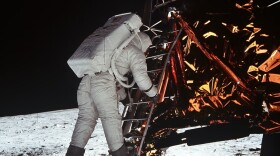 The Trump administration reportedly wants to cancel a collection of science missions at NASA. One, whose development and operation is based at Huntsville’s Marshall Space Flight Center in Alabama, appears to be one rallying point for NASA workers planning on staging a protest over federal budget cuts. The demonstration is set to take place on what’s known as “Moon Day” on July 20th, when the agency celebrates the landing astronauts on the moon during Apollo 11 in 1969.
-
 Kids along the Gulf coast can experience a little liquid nitrogen along with some holiday fun this Saturday. The Gulf Coast Exploreum Science Center in Mobile is hosting what it’s calling Christmas at the Castle.
-
 Alabama is getting a financial boost when it comes to supporting science, technology, engineering and math projects in the classroom. Dozens of schools will receive $246,500 in funding from Tennessee Valley Authority's STEM Classroom Grant Program, impacting more than 16,000 students and educators.
-
 An Alabama college is working to prepare its students for an evolving workforce by spearheading artificial intelligence (AI) education and research. With a $400,000 grant from the National Science Foundation (NSF), Auburn University at Montgomery (AUM) plans to enhance its AI infrastructure and expand its curriculum and research.
-
 For the second year, teams from Kilby Laboratory School’s Robotics Program will compete in the VEX Robotics World Championship competition. This is the largest robotics contest in the world, with sponsors including Amazon, NASA and Tesla. The competition is taking place in Dallas from April 25 through May 3.
-
 In Antarctica, the Thwaites Glacier is the widest glacier on the planet. Its stability is in jeopardy due to the massive landform losing about 50 billion tons of ice more than it is receiving in snowfall within a year. Accelerating ice loss has been observed since the 1970s, but it is unclear when this significant melting initiated, until now.

Digital Media Center
Bryant-Denny Stadium, Gate 4
Box 870370
920 Paul Bryant Drive
Tuscaloosa, AL 35487-0370
205-348-6644
© 2026 Alabama Public Radio
Bryant-Denny Stadium, Gate 4
Box 870370
920 Paul Bryant Drive
Tuscaloosa, AL 35487-0370
205-348-6644
© 2026 Alabama Public Radio
Play Live Radio
Next Up:
0:00
0:00
Available On Air Stations


