

Pat Duggins
Fifteen Alabama communities are planning to stage “No Kings” protests just days ahead of the November mid-terms. Previous days including hand drawn signs, chanting, and colorful costumes. Tuscaloosa, Auburn, Athens, Selma, Mobile, Birmingham, Dadeville, Oxford, Foley, Fort Payne, and Oneonta are among the cities where protests are planned. Behind the get-out-the-vote message during today's protests, are concerns among members of the Alabama League of Women Voters.


We are honored to feature exclusive artwork by Huntsville artist Guadalupe Lanning Robinson—whose work bridges her Mexican heritage with Southern roots—on the latest APR collectors mug. Available during our End of Year Pledge Drive (December 1-3) when you donate $15/month or $180 and while supplies last.
News & Commentaries From APR
-
 You may think your cat understands you when you talk to it - and you may be right!
 -
 In this episode of BrightPath, hosts Lisa Jones and Johnnie Aycock welcome Dr. Jeremy Carr, Central Alabama Community College Chemistry Instructor, to the studio to discuss the power of student-driven discovery, why microgravity is the ultimate laboratory, and what this means for the future of scientific innovation. They dive into an incredible student-led research project happening right here in Alabama. From sparking curiosity in the classroom to designing and defending a real space experiment, they explore how undergraduate students are taking science from the lab bench to low Earth orbit.
 -
 A year ago, commentator Cam Marston was plotting his escape from a job he’d come to hate. This morning, he tells us what changed, and why it’s made these commentaries harder to write.
 -
 If the very mention of the phrase “retirement planning” makes you shudder, you’re definitely not alone—2026 survey data from the National Institute on Retirement Security says somewhere between 40 and 55 percent of Americans feel unprepared for or lack confidence in having stability in their retirement years. Another survey says 47% of America’s workers believe they’ll never be able to fully retire. Here to hopefully dispel some anxiety is Dr. Jesse Jurgenson, an Assistant Professor of Practice within the Texas Tech University School of Financial Planning. He formerly spent three years teaching at the University of Alabama in Tuscaloosa as a personal finance pro before heading to Lubbock.
 -
 What does it take to turn Alabama politics into cartoons? Mostly patience, Pink Floyd playlists and waiting for someone to act up. Tune into our latest Quick-Fire Quips with "moderately disturbed" editorial cartoonist JD Crowe to hear the stories behind his most memorable sketches. Plus: iconic sunsets and tiki bar vibes at Fairhope's American Legion Post 199, his go-to road trip snack, how his art landed in the Baseball Hall of Fame before Pete Rose, and why you should check out the local Story Slam at The Book Cellar.
 -
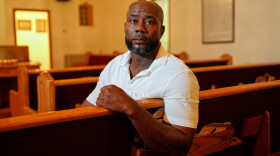 Years after his release from prison, Patrick Dewayne Smith of Alabama spends Sundays with his family in a modest brick church with a white steeple in rural Tennessee. He works two jobs. He goes to ball games to cheer for nieces and nephews he had never met. After serving 13 years for a nonviolent drug conviction, he is trying to rebuild his life.
 -
 No. 6 Alabama is preparing to play without leading wide receiver Ryan Coleman-Williams at 14th-ranked Tennessee on Saturday. Crimson Tide coach Kalen DeBoer says Coleman-Williams is doubtful for the rivalry known as “The Third Saturday in October.” The team captain is dealing with multiple injuries, including a concussion.
 -
-
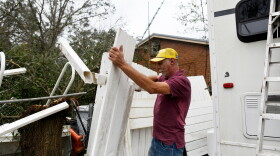 People in the Florida Panhandle and southern Alabama cleaned up after Hurricane Isaias swept through as the storm's remnants caused flooding in North Carolina on Sunday, while powerful Pacific Ocean waves stirred up by Rachel, a former tropical storm, battered the coast of Southern California.
 -
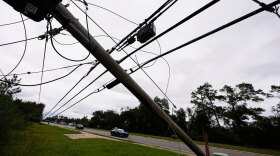 As people in the Florida Panhandle and southern Alabama cleaned up in the wake of Isaias, heavy rainfall was bringing the risk of flooding Sunday across the central Appalachians and the mid-Atlantic region as the storm's remnants moved north.
 -
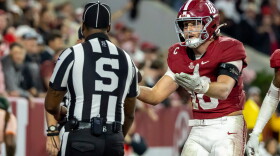 If Georgia lands the No. 1 ranking, it should probably come with an asterisk. The second-ranked Bulldogs benefited from what appeared to be a blown call in a 20-17 victory at No. 2 Alabama on Saturday night.
 -
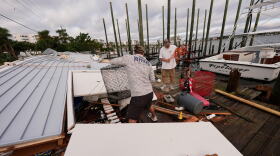 Published reports say that heavy winds from Hurricane Isaias led to two fatalities in Alabama and Florida (updated to four.) NBC news reports that one person was killed in East Birmingham when a tree fell on a house. Another person was trapped. CBS News reports a woman in Escambia County, Florida died when a tree hit her house in the winds of Isaias. The other two fatalities also resulted from trees hitting homes.


Latest News From NPR
- Scuffles and fires break out as protesters rally across France, joining students
- Pope Leo XIV leaves hospital days after lung cancer surgery
- Zelenskyy urges support for new US sanctions on Russia after Trump puts them on hold
- Decades after apartheid, South Africans seek justice for crimes of the past
- No Kings turns its focus to voting this weekend. Here's what we know

Big ideas are taking shape in this place we call home. On BrightPath, hosts Lisa Jones and Johnnie Aycock meet the researchers, innovators, and changemakers pursuing answers to questions that matter. Their conversations reveal the surprising stories and real people behind the work—and how discoveries made here could reach far beyond Alabama. Come curious. Leave inspired by what’s possible in this place. Listen to BrightPath Fridays at 3:00 p.m. on Alabama Public Radio.

"Simplified" is an interview-style show where Morning Edition host Lacey Alexander takes complex topics and breaks them down so that everyone can better understand them. She enlists a new academic in the state of Alabama every week to simplify a big idea-- whether it's science, economics, media or anything in between.

Quick-Fire Quips is centered around people who stand out in Alabama. Host Baillee Majors presents guests with a questionnaire of playful personal questions and questions about the Yellowhammer State.

Sports Minded podcast with host Brittany Young features interviews with coaches, athletes and sports personnel. Insight, commentary and analysis on professional, collegiate and high school sports can be heard here.

Speaking of Pets with host Mindy Norton is a commentary for people who care about pets and want to celebrate that special relationship between humans and animal companions.

Alabama is known for football and white barbecue sauce. But we’re also making our mark in science, literature and the arts—and we helped put astronauts on the moon! Join APR news director Pat Duggins as he takes up topics like this with interviews on APR Notebook.

Dr. Don Noble, specializing in Southern and American literature, gives his weekly review on the work of Alabama’s finest authors.

StoryCorps episodes show a candid, unscripted conversation between two people about love, loss, family, friendship and everything else in between. These stories are from Selma, where APR recently hosted the Airstream portable studio.

Host Cam Marston brings fun weekly commentaries on generational and demographic trends to provide new ways to interpret the changing world around us.

Coffee & History brings you weekly conversations with fascinating figures in the historical community. Each Sunday morning, Rebecca Todd Minder, Susan E. Reynolds and Caroline Gazzara-McKenzie, explore and share the stories that shape Alabama.
-
 Beau’s Law is Alabama’s first statewide statute establishing minimum care requirements for dogs kept outdoors. It is in effect NOW!
 -
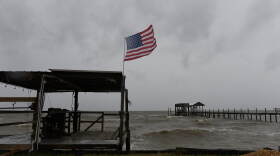 Hundreds of thousands of people in Alabama and the Florida Panhandle were without power early Saturday after Isaias crashed into the U.S. Gulf Coast as a dangerous hurricane and left flooded roads and downed trees in its wake as it moved inland. Poweroutage.us reports 300,000 in Alabama in the dark this morning, and 400,000 more in Florida.
 -
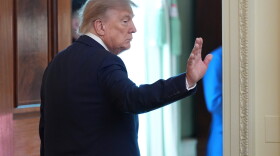 The Tuscaloosa Police Department and the White House Press office confirm that President Trump is cancelling his plans to fly to Tuscaloosa to see Alabama play Georgia at Bryant-Denny Stadium. The reason given are safety concerns about flying to the west central part of the state so soon after arrival of Hurricane Isaias. The National Hurricane Center is forecasting landfall around the Pensacola area overnight tonight.
 -
 Walking your dog may seem like a chore at times, but it's good for both of you, for your health and for your relationship!
 -
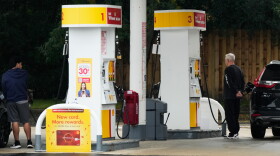 Hurricane Isaias is forecast to miss the oil industry’s biggest hubs along the Gulf Coast, but could still nudge fuel prices higher if it triggers power outages that shut down refineries for processing crude, according to experts. An extended refinery shutdown would impact fuel supplies that already have taken a hit from the U.S. war against Iran and Russia’s war against Ukraine.
 -
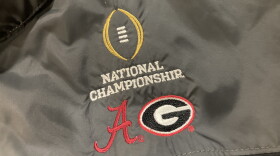 The rules for tomorrow’s high stakes Southeastern Conference game between The Crimson Tide and the Bulldogs are changing. Partly due to the possible attendance of President Trump, and due to the impending arrival of Hurricane Isaias. College football games in Tuscaloosa typically see white tents blossoming on a green space at the University of Alabama known as the “quad.” That’s where tailgaters gather to party before kickoff.
 -
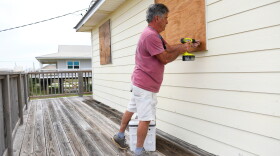
 Residents boarded up windows and stacked sandbags Thursday while thousands of National Guard soldiers were deploying in anticipation of Hurricane Isaias, which packed swift winds and threatened to bring a storm surge with devastating floods to the U.S. Gulf Coast.
 -
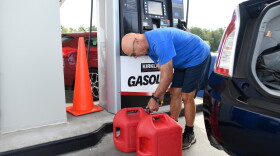
 Isaias strengthened into a Category 2 hurricane as it barreled toward a possible landfall on Alabama’s border with Florida. The approach of the storm is prompting orders for tourists to abandon beaches for safer spots inland, sending locals scurrying for gas and groceries and leading fishing crews to secure their boats before the potentially destructive storm’s arrival.
 -
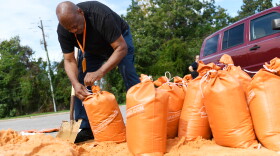 Residents of Alabama, coastal Mississippi, and the western Florida panhandle are getting ready for rough ride from Hurricane Isaias. Forecasters are predicting landfall late Friday or early Saturday. That hit could occur anywhere from Ocean Springs in Mississippi, to Mobile and the Eastern Shore in Alabama, to the western Florida panhandle. The lower third of our state is facing the possibility of tropical storm force winds and rain. Mike Evans is manager of Mobile County Emergency Management. He says residents need to get storm updates from a trusted source like the National Weather Service.
 -
 How does an 11-year-old camper finding her rhythm behind a drum set turn into a lifelong calling to empower young women? Find out on this episode of Quick-Fire Quips with Mary Foster, former camper and current mentor with Girls Rock Birmingham. She opens up about finding her home in music, how the non-profit builds confidence and community on stage at Saturn, and why spaces built for young women are so vital in today's music scene. Plus, hear all about the return of the free, come-as-you-are Girls Rock Fest at Avondale Brewing Company!
 -
 Some coastal residents of Alabama are being advised to voluntarily evacuate as Isaias surged toward the U.S. Gulf Coast on Thursday. It’s the first hurricane of the Atlantic season, prompting mandatory evacuations and school closures in parts of Florida. Isaias was forecast to intensify rapidly and bring strong winds and a life-threatening storm surge to the Florida Panhandle, southern Alabama and southern Mississippi when it makes landfall on the northern Gulf Coast late Friday or early Saturday. Heavy rain with the risk of flooding was possible into the weekend as far inland as the Tennessee Valley.
 -
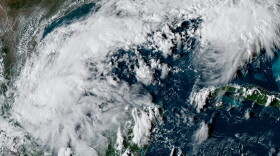 Hurricane forecasters are keeping an eye on the progress of Isaias. The system grew to tropical storm strength on Wednesday, and is expected to be a hurricane when it reaches anywhere form Gulfport in Mississippi, to Mobile, to Panama City Beach in Florida. The latest forecast has landfall expected sometime Friday Night. Before Isaias formed, APR student reporter John Underwood talked with three experts for tips on how to get ready for this year’s hurricane season. One special note—John’s story talks about preparing for evacuation.EDITOR'S Note— Local leaders in Gulf Shores and Orange Beach in Alabama are advising residents of low lying areas to voluntarily evacuate. In Florida, the Associated Press is reporting that some residents of RV parks in Gulf County and Okaloosa County (Zones A and B) are under a mandatory evacuation order.


